Tracks
- Tomi
- GM
- Palo Santo
- A insustentável leveza
- Pomeriggio
- Pampero
- Vento frio na cara
Performers
João Pedro Brandão – alto saxophone, soprano saxophone
Jose Pedro Coelho – tenor saxophone
João Grilo – piano
Demian Cabaud – double bass
Marcos Cavaleiro – drums
Record label: Carimbo Porta-Jazz
Recorded on: January 10 and 11, 2024 at Cara Ojm Studio
Release date:
Demian Cabaud was born in Buenos Aires, Argentina, in a family where there were no musicians. He discovered music on his own at the age of 11 and began to delve deeply into it. Later, he fell in love with the sound of the double bass and began studying with Hernán Merlo, Miguel Ángel Villarroel, and for the past ten years with Alejandro Erlich Oliva.
In 2001, he moved to Boston, Massachusetts, after receiving a scholarship from Berklee College of Music, where he graduated in May 2003.
In Boston, he came into contact with and learned from great masters. A tour took him to Portugal, and in 2004 he moved to Lisbon, and later to Porto, where he now lives with his family.
Cabaud has played and recorded with musicians such as Lee Konitz, Joe Lovano, Chris Cheek, Mark Turner, Bill McHenry, Rich Perry, Rick Margitza, Seamus Blake, Miguel Zenón, Perico Sambeat, Maria Schneider, Kurt Rosenwinkel, Jason Moran, Bill Carrothers, Leo Genovese, Albert Sanz, Fred Hersch, Maria João, Theo Bleckmann, Sheila Jordan, John Riley, Jorge Rossy, and Francisco Mela, among many others.
He teaches in the Master’s Program at Siena Jazz in Italy and has been a member of the prestigious Orquestra Jazz de Matosinhos OJM for the past 18 years.
He has taken part in more than 70 albums and has released 10 albums as a leader.
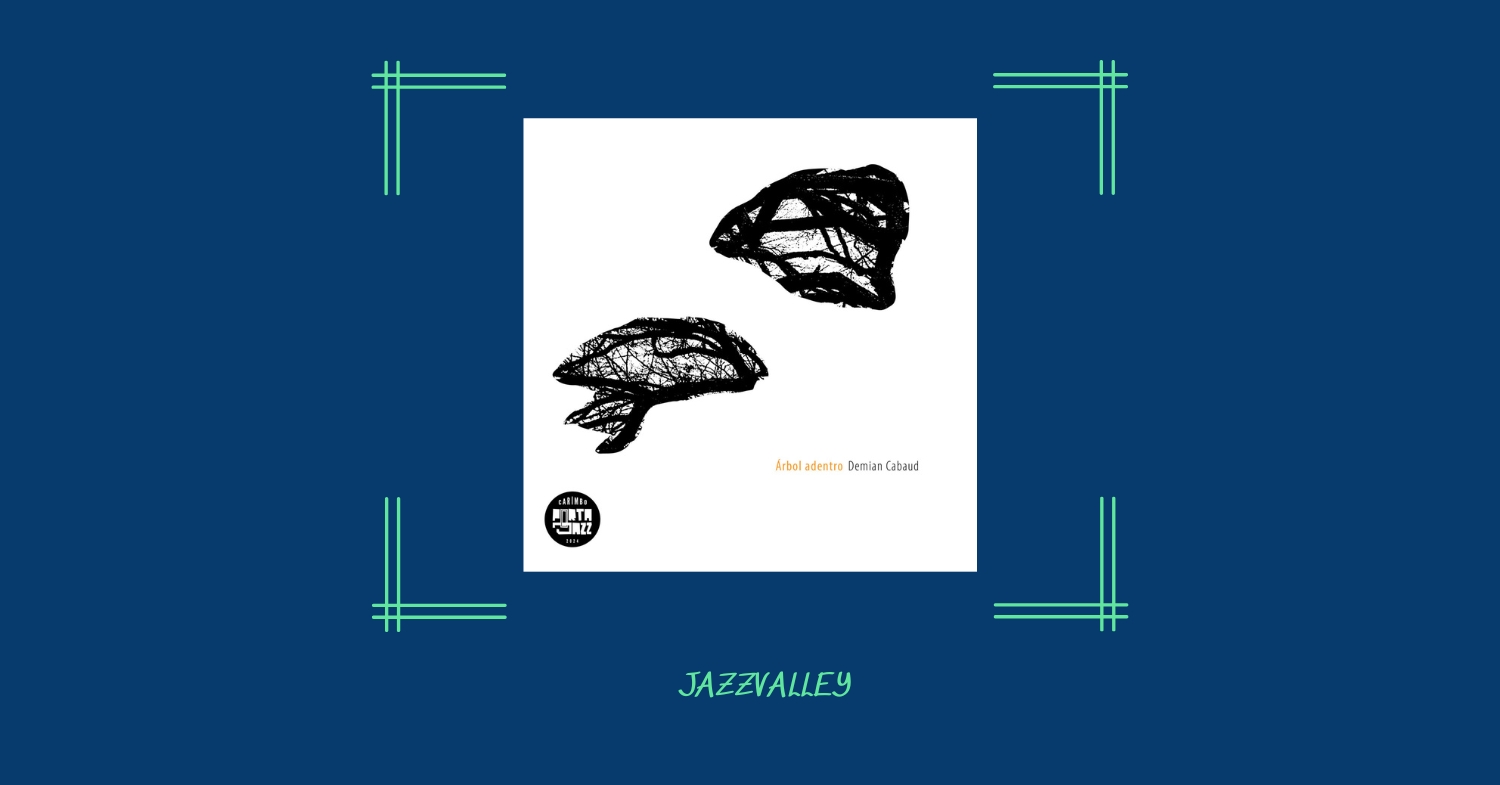
In 2024, Cabaud presents Árbol Adentro, his most personal album, recorded in quintet format with João Pedro Brandão on alto and soprano saxophones; Jose Pedro Coelho on tenor saxophone; João Grilo on piano; and Marcos Cavaleiro on drums.
The group has existed for four years but has been playing together for 15 years in various contexts, which has created a deep sense of empathy, trust, and connection.
According to Cabaud: “I’ve never felt what I feel with this group, a depth and cohesion that is rare in jazz.”
The album is inspired by Octavio Paz. “When I made the decision to come to Portugal in 2003, a great Argentine friend gave me an anthology of Octavio Paz with the dedication: ‘think poetically of me in the old world.’ I love poetry, and this is a book I consult regularly; the poems and haikus are always a great source of inspiration.” The album takes its name from one of the poems included in that anthology.
Unlike other albums by Cabaud, this one had a long gestation, gradually maturing through months of rehearsals, selecting the pieces that best suited each member of the group.
Cabaud’s music expresses his feelings, experiences, and personal journey, as heard in the opening track, “Tomi,” a tribute commissioned by his son Tomás.
His compositions are not structurally simple, as can be heard in “GM,” a powerful piece followed by “Palo Santo,” the album’s longest track—also complex, though not as intense. Elements of Argentine folklore blend with contemporary jazz in “A insustentável leveza,” where chamber music elements are also evident, as in other tracks on the album.
A piano solo introduces the introspective piece “Pomeriggio,” which evokes the beautiful landscape of the Italian Tuscany.
“Pampero” takes us back once more to his native Argentina, with space for free jazz and excellent contemporary expression.
The album closes with “Vento frio na cara,” which maintains the narrative line of the preceding tracks.
Cabaud is unafraid to venture into unexplored paths, full of freedom, with a contemporary and abstract language.
La Habitación del Jazz